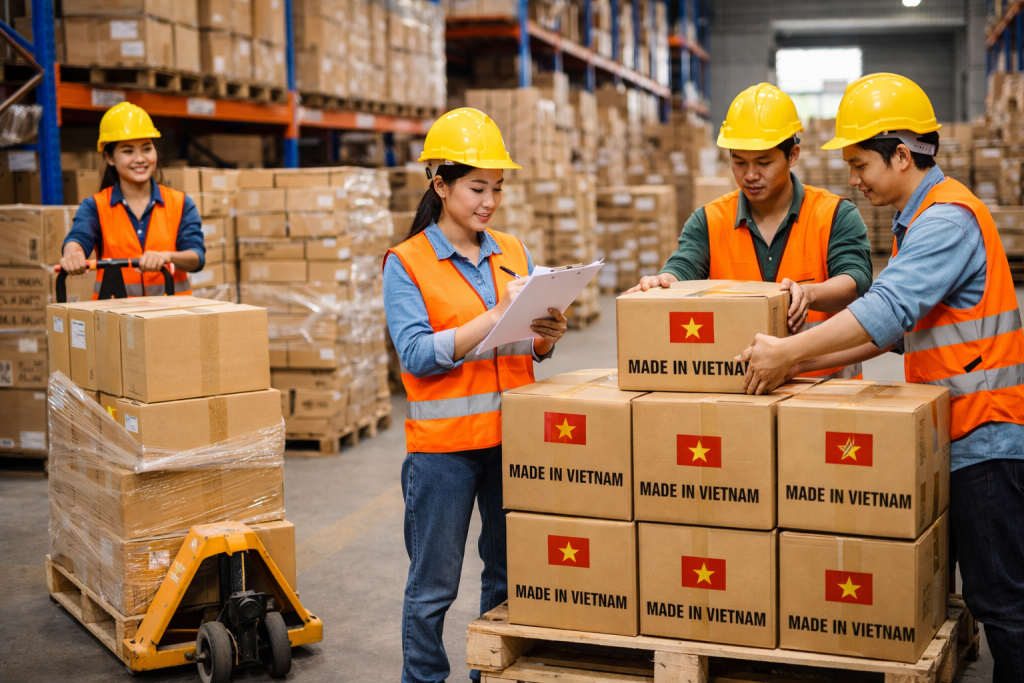
Vietnam has become one of the fastest-growing export economies in Asia. The country exports a wide variety of products, including electronics, textiles, furniture, agricultural goods, and seafood. Consequently, many businesses around the world look for opportunities to import goods from Vietnam.
However, exporting products requires a clear understanding of regulations, documentation, and logistics. Therefore, companies must follow the Vietnam export process carefully to avoid delays and unexpected costs.
In this guide, you will learn the complete export procedure from A to Z. Additionally, you will understand how businesses prepare goods, handle documentation, and complete international shipping successfully.
Why Vietnam Is a Major Export Hub
Vietnam continues to attract international trade due to several advantages.
First, the country has a strong manufacturing base. Many global companies produce goods in Vietnam because labor costs remain competitive. Moreover, the government encourages export activities through trade agreements and economic reforms.
For example, Vietnam participates in multiple free trade agreements such as the CPTPP and EVFTA. As a result, many Vietnamese products enjoy reduced import tariffs in international markets.
Furthermore, Vietnam’s strategic location in Southeast Asia improves logistics connections with major global markets.
You can explore more about Vietnam’s trade policies through the official website of the World Trade Organization.
Step-by-Step Vietnam Export Process
Understanding the export procedure helps businesses reduce risks and improve efficiency. The following steps explain the typical export workflow.
Step 1: Market Research and Product Selection
Identify International Demand
Before exporting, businesses must analyze global demand. Companies should research target markets, customer preferences, and competitors.
For instance, Vietnamese coffee exports perform well in Europe, while seafood exports remain strong in Japan and the United States.
Therefore, choosing the right product and market increases export success.
Ensure Product Compliance
Next, businesses must ensure that products meet international standards. Each market has specific regulations for safety, packaging, and labeling.
For example:
Food products require hygiene certification
Electronics must meet safety standards
Agricultural products may require quarantine inspection
Because of these requirements, exporters must prepare documentation carefully.
Step 2: Register an Export Business
Companies must register their export activities with Vietnamese authorities.
First, the business must obtain a legal business registration certificate. Then, the company registers for export operations with customs authorities.
Fortunately, Vietnam allows most companies to export products without special licenses. However, certain products still require export permits.
These products may include natural resources, cultural artifacts, or restricted goods.
Businesses can verify regulations through the Ministry of Industry and Trade.
Step 3: Prepare Export Contracts
After identifying buyers, the exporter and importer must sign a sales contract.
The contract should clearly define the following elements:
Product description
Quantity and quality standards
Payment terms
Delivery schedule
Shipping terms (Incoterms)
For example, many exporters use FOB (Free On Board) or CIF (Cost Insurance Freight) shipping terms.
A clear contract reduces misunderstandings between trading partners.
Step 4: Prepare Export Documentation
Documentation plays a crucial role in international trade. Therefore, exporters must prepare accurate paperwork before shipment.
Key Export Documents
Typical export documents include:
Commercial Invoice
Packing List
Sales Contract
Bill of Lading
Certificate of Origin
Export Declaration
Each document provides essential information about the goods and shipment.
Additionally, some markets require special certificates such as phytosanitary certificates for agricultural products.
Step 5: Customs Clearance
Once documents are ready, the exporter must submit them to Vietnamese customs authorities.
Customs Declaration
Exporters must declare goods through the electronic customs system. The declaration includes information such as product type, value, and destination country.
After submission, customs officers review the documentation.
Inspection Process
In some cases, customs authorities inspect the goods physically. However, many shipments pass through quickly when documentation is accurate.
Consequently, exporters should ensure all documents remain consistent.
Step 6: Arrange International Logistics
After customs clearance, exporters must arrange transportation.
Vietnam has several major international ports, including:
Hai Phong Port
Da Nang Port
Cat Lai Port in Ho Chi Minh City
These ports connect Vietnam to major global shipping routes.
Exporters can choose between:
Sea freight
Air freight
Multimodal transport
Sea freight remains the most popular option because it offers lower costs for large shipments.
Step 7: Shipping and Delivery
When goods reach the port, logistics companies load them onto ships or aircraft.
The shipping company then issues the Bill of Lading, which confirms the cargo shipment.
Next, the exporter sends the necessary documents to the importer. These documents allow the buyer to clear customs in the destination country.
At this stage, the goods travel to the international market.
Step 8: Payment and Trade Settlement
Finally, the importer completes payment according to the contract.
Common international payment methods include:
Letter of Credit (L/C)
Telegraphic Transfer (T/T)
Documentary Collection
Each method offers different levels of security and flexibility.
For beginners, letters of credit provide stronger protection for exporters.
Challenges in the Vietnam Export Process
Although Vietnam offers strong export opportunities, companies still face several challenges.
First, international regulations change frequently. Therefore, exporters must stay updated on import rules in target markets.
Second, logistics costs sometimes fluctuate due to global shipping demand.
Finally, exporters must ensure product quality remains consistent. International buyers expect reliable standards and timely delivery.
However, businesses that manage these challenges successfully can build long-term global partnerships.
Tips for Successful Export from Vietnam
To succeed in international trade, businesses should follow several best practices.
First, they should conduct detailed market research before entering new markets.
Second, companies should invest in quality control and packaging.
Third, building relationships with reliable logistics partners improves shipping efficiency.
Finally, exporters should develop strong communication with buyers to maintain trust.
These strategies help companies expand their presence in global markets.
Conclusion
The Vietnam export process involves several important steps, including market research, business registration, contract preparation, documentation, customs clearance, logistics, and payment settlement.
Although the process requires careful planning, Vietnam offers strong opportunities for global trade. The country’s manufacturing strength, strategic location, and international trade agreements create ideal conditions for exporters.
Therefore, businesses that understand the export procedure can successfully bring Vietnamese products to global markets.
With the right strategy, exporting from Vietnam can become a profitable and sustainable business opportunity.